

The global football community woke up today to shocking news from Ecuador, where Barcelona SC defender Mario Alberto Pineida Martinez was shot dead in the street together with his wife. His mother was also seriously injured during the armed attack. It is reported that the area where the incident occurred has recently seen a rise in violence due to the influence of drug cartels and criminal gangs.
Football is often presented as a game that unites millions and brings hope and joy. However, this latest incident forces a deeper reflection. Although the official investigation has not directly linked Pineida’s murder to his football career, the fact that the player had reported receiving death threats just hours before the incident and had requested personal protection has once again brought security concerns to the forefront. This tragedy is considered one of the most high profile incidents in Ecuadorian football in recent years.
It appears that in some countries footballers are confronted with the most dangerous realities of society, sometimes with fatal consequences. History records several cases in which footballers lost their lives as a result of armed attacks, with the causes rooted not only in sport, but in deeper social, criminal and political issues.
We present to our readers some documented cases in football history that ended in death.
Andres Escobar – the dark shadow of the betting mafia (July 2, 1994)
Colombian defender Andres Escobar was shot dead in Medellin after scoring an own goal at the 1994 World Cup. His murder was linked to the betting mafia and drug cartels. Colombia’s early elimination from the tournament caused major financial losses, turning Escobar into a target. This case is considered one of the most painful examples of how sporting outcomes can dangerously intersect with the criminal world. Escobar was 27 years old.
Abel Tador – robbery and a security gap (June 14, 2009)
Nigerian footballer Abel Tador was killed during a robbery carried out by armed criminals. The incident occurred while he was returning home after celebrating his club’s championship and was not related to his football activity. This tragedy highlighted how footballers and public figures in Nigeria are often targeted because of their perceived wealth. Tador was 24 years old.
Alexandro Penaranda – a tragic end to a personal conflict (June 1, 2018)
Colombian forward Alexandro Penaranda lost his life during an armed raid at a gathering held at another footballer’s home. Investigators described the attack as criminal violence and a personal dispute rather than a planned assassination. Penaranda was also 24 years old at the time of his death.
Tito Diaz – traces of post war violence (December 12, 1998)
Salvadoran footballer Tito Diaz was shot dead during a confrontation that broke out in a bar in the city of Santa Rosa de Lima. The incident took place in the post civil war period in El Salvador, when the country was plagued by widespread weapons and street violence. The murder was largely associated with social tension and security problems. Diaz was 28 years old.
Raul Esnal – a victim of political instability (December 15, 1993)
Uruguayan footballer Raul Esnal was killed in an armed attack in El Salvador. The perpetrators were never officially identified, and the case remains one of the country’s long unsolved crimes. Esnal was 37 years old when he was murdered.
Emil Huseynov – a market dispute (April 19, 2015)
Sadly, the list of murdered footballers also includes former Azerbaijani player Emil Huseynov. He was stabbed to death during a fight with Armenians in Yekaterinburg, Russia, on April 19, 2015. The killer was Tigran Chichakyan, a candidate master of mixed martial arts.
It should be noted that during his football career Emil Huseynov played for Neftchi, Karvan and Absheron. He featured as a defensive midfielder. After Absheron disbanded in 2011, he retired from football, moved to Russia for work and became involved in market trading. He was 28 years old at the time of his death.
The overall picture of these events shows that the shooting deaths of footballers are not solely related to sport, but are closely connected to deeper societal problems. The facts examined prove that the influence of drug cartels and betting mafias, the prevalence of armed robberies, the escalation of personal conflicts, as well as political and social instability, easily turn footballers into targets. In particular, weak security in some countries of Latin America and Africa leaves even well known athletes unprotected. Although international football bodies began to pay more serious attention to security issues after the Andres Escobar case, tragedies in recent years show that the problem remains relevant. All these incidents serve as a bitter reminder that football is not only a game played on the pitch, but is deeply intertwined with social realities, and that footballers themselves can become victims of those realities.
Aqil Tagiyev
09:42
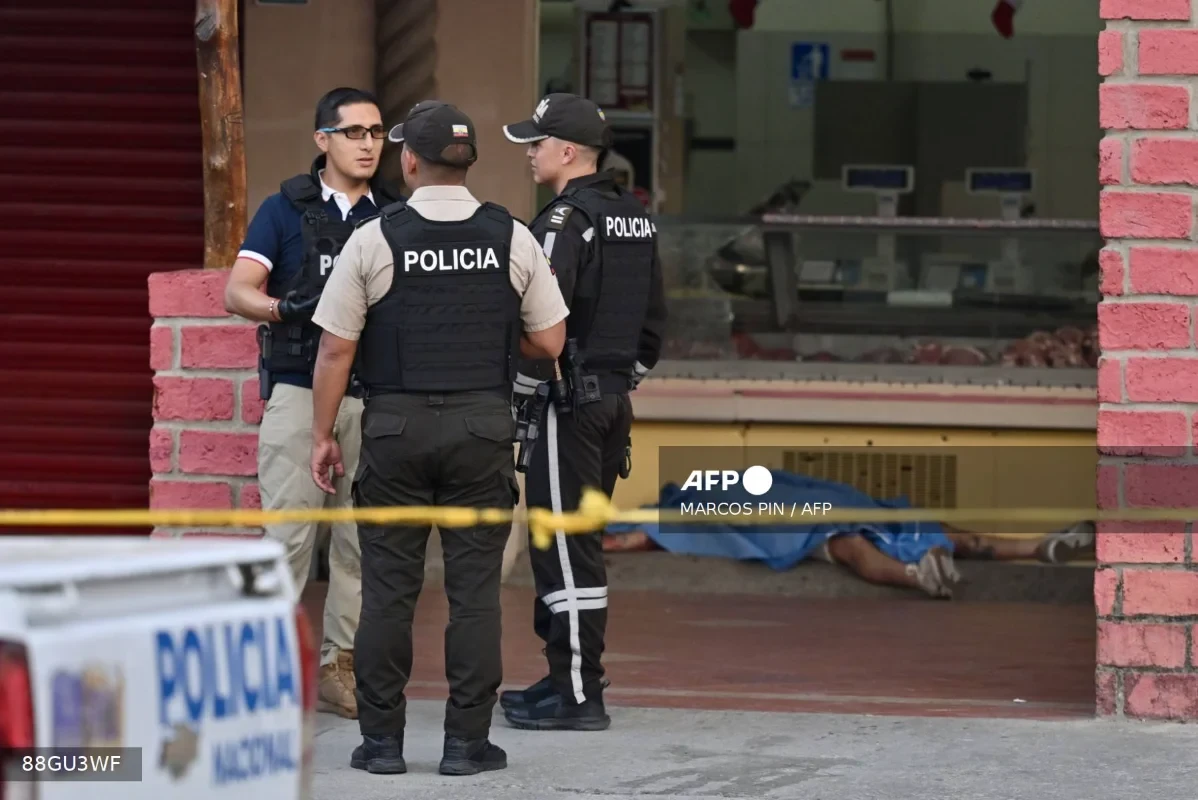
Ecuadorian police confirmed on Wednesday that Mario Pineida, a 33-year-old defender for Barcelona de Guayaquil, was shot dead in an apparent targeted attack, reports Idman.Biz, as violence continues to escalate in the Andean nation.
Another person was also killed in the incident, while a third individual sustained injuries. Authorities have not released the identities of the other victims.
Ecuador’s Interior Ministry confirmed Pineida’s death without providing further details. In an official statement, Barcelona de Guayaquil said the club and its supporters are deeply saddened by the tragic loss.
Pineida began his professional career with Independiente del Valle, playing for the club between 2010 and 2015. He joined Barcelona de Guayaquil in 2016, where he won two Ecuadorian league titles. The defender also spent a brief period with Brazil’s Fluminense in 2022.
Local media reported that the incident occurred in the Samanes district in northern Guayaquil, approximately 265 kilometers (165 miles) southwest of the capital, Quito.
Ecuador is expected to record its most violent year on record, with more than 9,000 homicides projected, according to the Ecuadorian Observatory of Organized Crime. The country registered 7,063 violent deaths in 2024, following a then-record 8,248 killings in 2023.


