

Emil Balayev, a name once associated with great promise in Azerbaijani football, has had a career full of ups and downs.
Idman.biz reports according to Futbolinfo.az that having played for teams like Eintracht Frankfurt, Tobol, and the national team, his talent was undeniable. Yet, injuries and perhaps some questionable decisions prevented the goalkeeper from fully realizing his potential. Currently sidelined at Neftchi, Balayev's journey remains compelling.
In a recent interview, Balayev shared his thoughts on his past and his reasons for leaving Tobol, particularly his refusal to play under Armenian coach Grigory Babayan, a decision influenced by his family's history and the legacy of the Karabakh conflict.
- You were born in Volgograd. Why did your family move there?
- My father was studying there. After finishing his studies, he stayed and started working. That’s where I was born.
- You lived there until you were five. Do you remember anything from that time?
- It’s hard to recall much at that age. I have some blurry memories, but nothing concrete.
- It’s said your uncle was a professional footballer but had to quit due to an injury. Is that true?
- Yes, he played until he was about 16 or 17 in “Neftchi’s” youth teams during the early 1970s. Unfortunately, he suffered a knee injury. Back then, medical advancements weren’t as they are today. If it had happened now, surgery could have brought him back to football. But at that time, it wasn’t possible, and he had to end his career.
- Your father was a boxer. Did he achieve any notable results?
- He was active in boxing until he entered university. He was part of the “Dynamo” sports society. However, back then, sports facilities and conditions weren’t great, so many, including my father, chose to focus on education instead.
- Did you ever consider becoming a boxer like him?
- Not really. But if you ask me which sport I’d choose if it weren’t football, I’d say judo. I admire the sport and even have friends who practice it.
- How did you join Neftchi?
- I used to live near Neftchi’s old training base and played football in my neighborhood. Whenever I was sent to buy bread, I’d sneak off to play for an hour or two. My family noticed my passion and supported me. I started playing in paid groups at Neftchi’s base. Later, I caught attention in the “Stars of Tomorrow” tournament and joined Neftchi’s youth teams. But I played at Olympia until then. There was Elshan Abdullayev, from our neighborhood. He also played a big role in my coming to football. He used to tell me that "I'm going to football, come with me". He went to football training since he was 5-6 years old, when I was in 4th-5th grade.
- Who brought you into Neftch” from “Stars of Tomorrow”?
- I can’t remember specifically, but I was named the tournament’s best goalkeeper for two consecutive years. Rasim Kara even presented one of the awards to me.
- You initially wanted to be a playmaker, not a goalkeeper. How did that change?
- I enjoyed providing assists more than scoring goals. But during training, they noticed I was the tallest and suggested I play as a goalkeeper. It turned out I enjoyed it as well.
- How did Wolfgang Rolff help you join Eintracht Frankfurt?
- Rolff, who was an assistant coach at Frankfurt and knew me from the national team, informed Neftchi about an opportunity for me to join. I went on a two-week trial, but after just 6-7 days, they offered me a contract.
- Why didn’t your time at Eintracht last long?
- Their main goalkeeper was Kevin Trapp. Unfortunately, I got injured and had to undergo three surgeries. When my contract ended, they didn’t renew it.
– When you played for Eintracht, the current Bayer Leverkusen goalkeeper and Finland international, Lukáš Hrádecký, was also there.
– Yes, and I still have a warm relationship with him to this day. Before my last surgery, it was actually Hrádecký who introduced me to the doctor. We still keep in touch.
– By the way, after you, Hrádecký also sent Andrey Lunin to Qarabag. This time from Bayer.
– That’s just a coincidence. It was fate.
– I believe Heinz Lindner, who is now Austria’s national team goalkeeper, was also your teammate at Eintracht.
– Yes, when I was playing for Qarabag, we met before an away match against Basel. We reminisced about the old days.
– During your time at Eintracht, you shared the field with players like Kaan Ayhan, now at Galatasaray, former Galatasaray forward Haris Seferović, club legend Alexander Meier, and Japanese football icon Makoto Hasebe. Who were you closest to?
– That’s true. For example, when I was there, Meier was competing with Robert Lewandowski and Arjen Robben for the Bundesliga top scorer title. In the 2014/15 season, Meier outscored everyone with 19 goals. As for relationships, I got along well with everyone. I had an excellent relationship with Kaan Ayhan. He even visited my home in Frankfurt, and we had tea together. Later, during a friendly match under Gianni De Biasi’s tenure in Alanya, we met again. We talked, and he told me that his roots are from Igdır. He didn’t rule out the possibility of having Azerbaijani ancestry. By the way, Ayhan had to leave Eintracht during the Kovac brothers’ era. Perhaps Robert, who was once the Croatian national team captain, was still shaken by their dramatic loss to Turkey in Euro 2008, which might have influenced his decision not to give Kaan many chances in the team. Of course, this is just speculation.
Speaking of Hasebe, our lockers were next to each other in the dressing room. I had a good relationship with him as well. Paraguayan Nelson Valdez was also there. It was a friendly group of players.
– From what I know, head coach Thomas Schaaf trusted you, but he didn’t achieve much success at Eintracht despite building a formidable Werder Bremen team in the past.
– Five months after I joined, he was let go. I don’t know the exact reason. After him, they brought in former coach Armin Veh, but he didn’t stay long either. Eventually, the Kovac brothers took over. Maybe if Schaaf had been given more time, he could’ve built the team he envisioned. For instance, Jürgen Klopp was given time at Borussia Dortmund, and look what he achieved. Schaaf likely had that environment at Werder, but Eintracht had a different approach.
– You were performing well in Kazakhstan. Why did you leave Tobol? Was it because of the Armenian coach, Grigori Babayan, who joined the team?
– Yes, my father participated in the First Karabakh War. It’s impossible to forget our tragic history. I couldn’t play under the leadership of an Armenian coach. My father also advised me to leave Tobol, and I didn’t want to stay either. Perhaps, if an Armenian player had joined the team, it might have been manageable. But even then, I can’t say for sure that I would have stayed. After all, a player’s status isn’t higher than yours. But a coach is a different matter altogether—he’s the one making decisions. To be fair, Babayan wanted me to stay on the team. But I had already made my choice.
- Were there other offers from Kazakh clubs?
- Yes, but by then, I wasn’t interested in staying in Kazakhstan. I wanted to move to Europe.
- You had negotiations with Bodo/Glimt. Why didn’t it work out?
- The terms they offered didn’t align with what my manager had told me.
- Do you regret not joining Bodo/Glimt, especially given their recent success?
- No regrets. Everything happens for a reason. Shortly after, I joined Qarabag, and we achieved significant success, especially during the Patriotic War.
- Your time at Qarabag is seen as a highlight. Why didn’t you stay there longer?
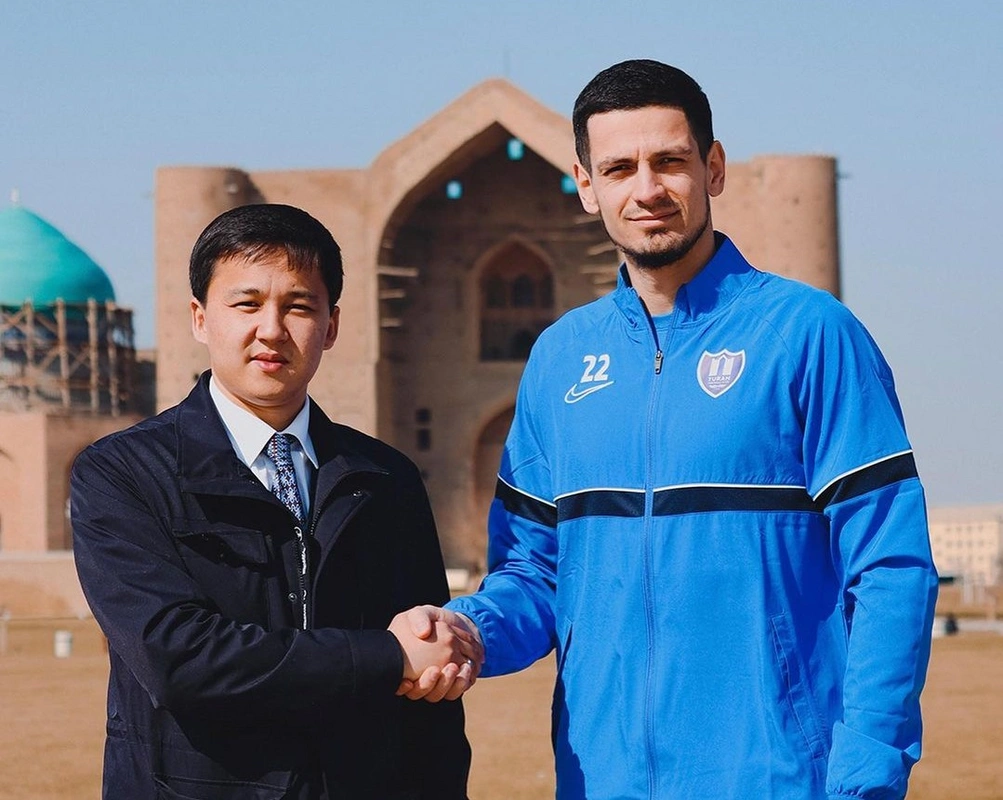
- I received an offer from Kazakhstan’s Turan club. Georgi Gazzaev, who knew me from “Tobol,” invited me. Unfortunately, he was dismissed shortly after, and things didn’t go as planned.
- In 2016/17, you were involved in an accident that resulted in a child’s death. How did that affect you?
- It’s something that stays with you forever. Such events can happen to anyone. The key is finding the strength to move forward, even if the memory still hurts.
– Interestingly, Qarabag’s Icelandic goalkeeper Halldórsson was also involved in an accident. However, the consequences for him were much lighter.
– Yes, that’s true. Of course, this is just a coincidence.
– You once posted, “Stay away from Priuses.” Why?
– There was a bit of sarcasm in that statement. I was referring more to motorcycles. When driving a car, you know you’re inside a ‘box’ and have some level of safety. My advice was for motorcyclists to protect themselves from Priuses because drivers of this brand tend to drive very dangerously.
– No one can forget your brilliant performance for the national team against Croatia in Baku! But after that, Emil disappeared.
– What do you mean by “disappeared”? After that match, I played in 15 more games for the national team. It just so happened that we didn’t lose in that match. Perhaps if we had lost, my debut wouldn’t have been as memorable. Temkin Khalilzade also scored a great goal in that game. Overall, the team showed incredible determination. We played very well against the world’s vice-champions. It stuck in people’s memory because the opponent was Croatia. If it had been a weaker team, no one would even remember it.
- Do you hope to return to the national team?
- Age doesn’t matter. Every footballer dreams of representing their country. My job is to prove myself at the club level.
– You seem to be facing barriers at the club level, unable to secure a spot in the starting lineup.
– It’s tough not to play for a year due to a serious injury.
– I’ve always wondered about this: we lack team play. Our field players might struggle with tactical intelligence, but goalkeepers are somewhat different—they aren't as bound by tactics. While our field players can’t break through, what’s holding back our goalkeepers?
– On the contrary, our goalkeepers often stand out. That’s largely because there are so many goal-scoring opportunities against our national team. For example, you might recall my game against Croatia or Shahrudin’s performance against Portugal. Or take Kamran. I wouldn’t say our goalkeepers aren’t good. Field players may be prepared differently, both technically and tactically, but a goalkeeper is under pressure for 90 minutes. For instance, when an attack is built on the left side, the defender on the right can relax a bit. But a goalkeeper faces continuous attacks. The opponent is always targeting your position. We’ve had some excellent goalkeepers in the national team.
– My point is that none of them make it to Europe.
– Khvicha Kvaratskhelia paved the way for the Georgians. When someone succeeds, people notice the talent in that nation. As a result, attention shifts to their market. If one of us could break through, it might open the door for others. Look at Mahir Emreli—he’s performing well now but had to play for two or three European teams to get here. This is a success for our country. Once we reach this point, agents will start looking in our direction.
– But is it fair to compare us with the Georgians? During the Soviet era, Tbilisi’s Dynamo had strong local players. In the post-independence period, they sent players like the Arveladze brothers, Kaladze, and Ketsbaia to Europe. They’ve always been in the spotlight.
– I understand, but they’ve had their slumps too. We’ve left certain things behind as well. At some point, we also need to open the door.
– Plus, the Georgian national team is playing in the European Championship. Since we don’t meet expectations, no one’s paying attention to us.
– The key reason they made it to the European Championship is the large number of players they have playing abroad. If more of our players competed against higher-level opponents overseas, our national team would also advance. For instance, if Rahil Mammadov hadn’t performed well at LKS Lodz, he wouldn’t have received an offer from Radomiak.
– I hear you enjoy reading and watching films.
– Lately, I’ve been short on time. In the past, I read a lot of Agatha Christie. I delved into her works after seeing the Hercule Poirot character in films. I’d particularly highlight Murder on the Orient Express
Idman.biz


