
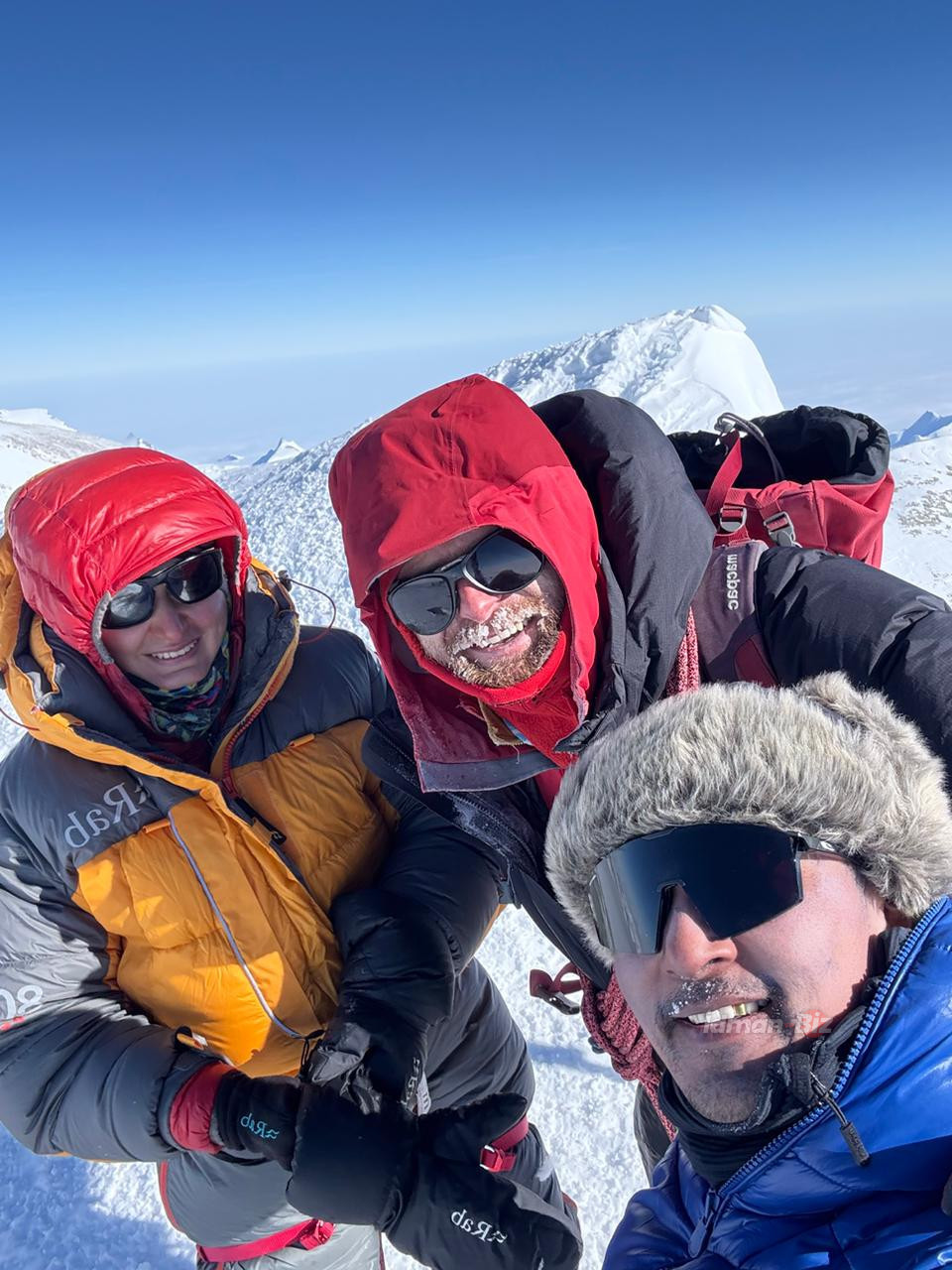
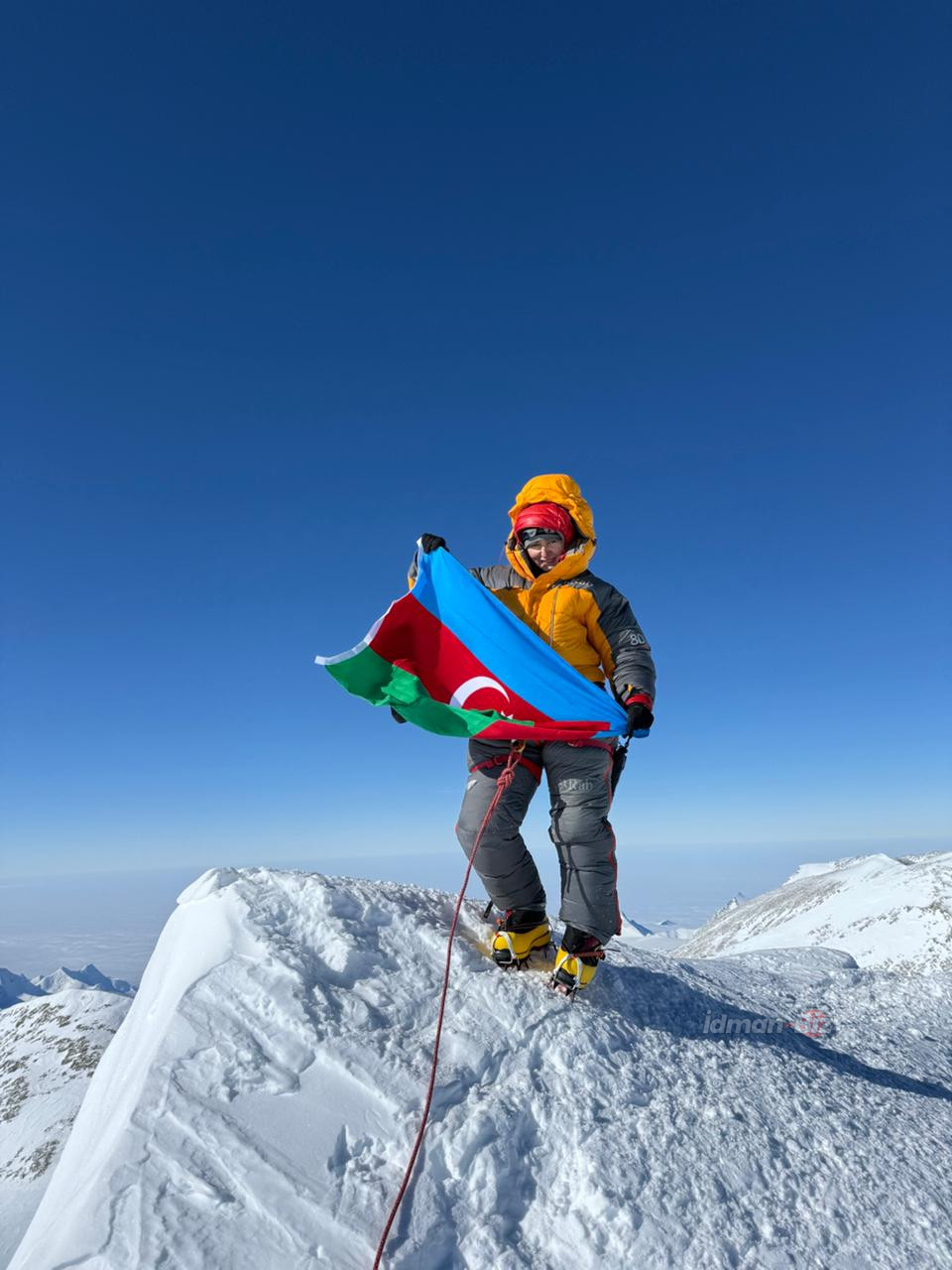
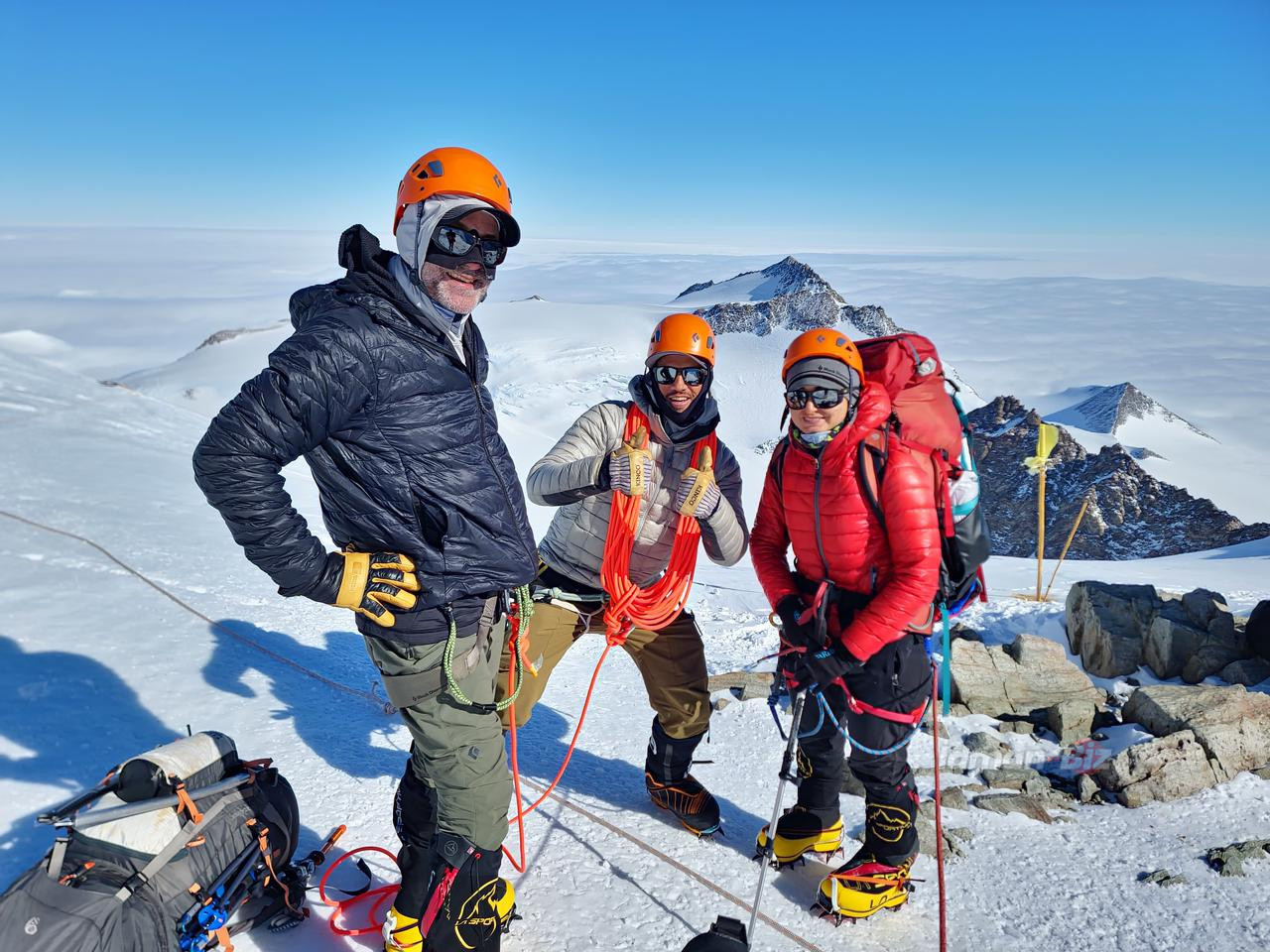
Elmira Aslanova is the first Azerbaijani woman to climb Mount Everest. Recently, she also reached the highest peak in Antarctica – Mount Vinson (4,892 meters). She undertook this climb as part of the "Seven Summits" project, which involves ascending the tallest mountains on each of the seven continents. Elmira reached Antarctica with the help of ALE (Antarctic Logistics & Expeditions), the only logistics company operating flights to the continent, which is governed by strict international agreements and scientific programs.
While still in Antarctica, Elmira Aslanova spoke to İdman.Biz about her expedition.
– What is unique about preparing for a climb in Antarctica?
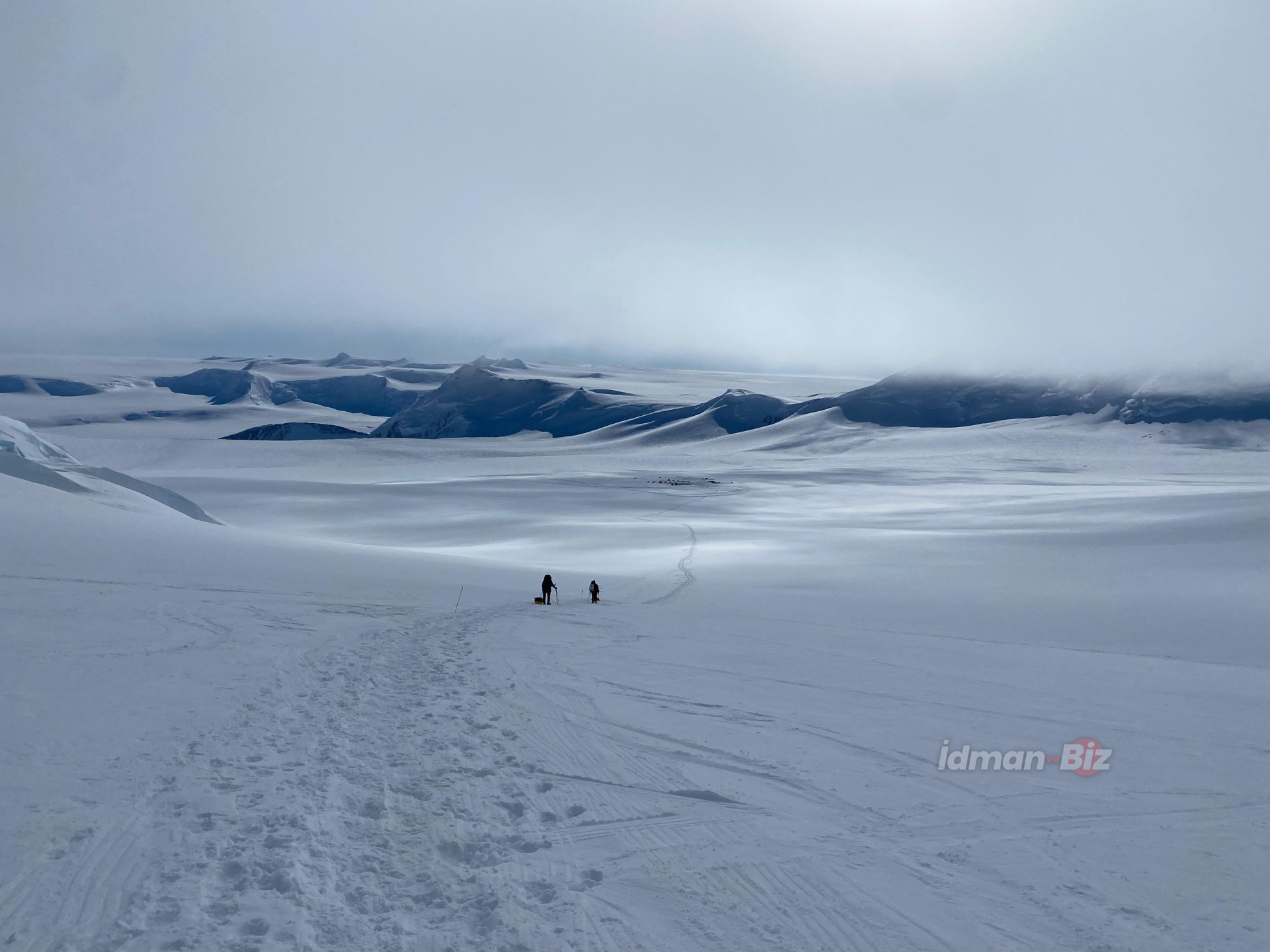
– Climbing Mount Vinson presents extreme weather conditions. Even though it is polar summer and the sun does not set but circles around, temperatures remain very low. The minimum temperature is –25°C, and at the summit, it can drop to –30–40°C, all accompanied by strong, cold winds. The moment the sun disappears behind a mountain, the temperature in the shadows drops sharply.
Preparation, therefore, focuses heavily on clothing and gear. Vinson is known for frequent cases of frostbite on fingers and noses. I purchased the warmest gloves recommended by the expedition team and brought the suit I wore on Everest. In short, I brought everything warm and reliable.
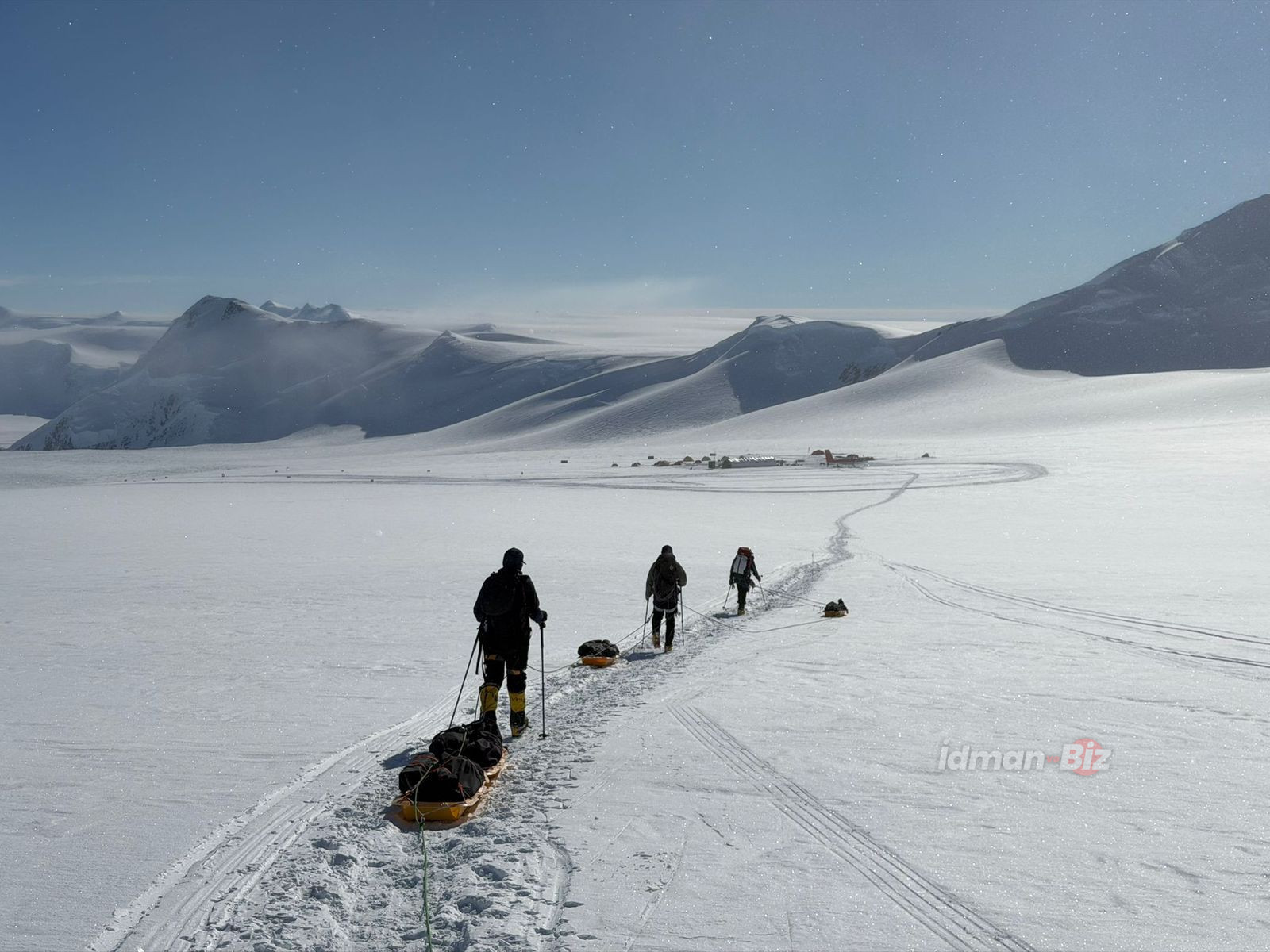
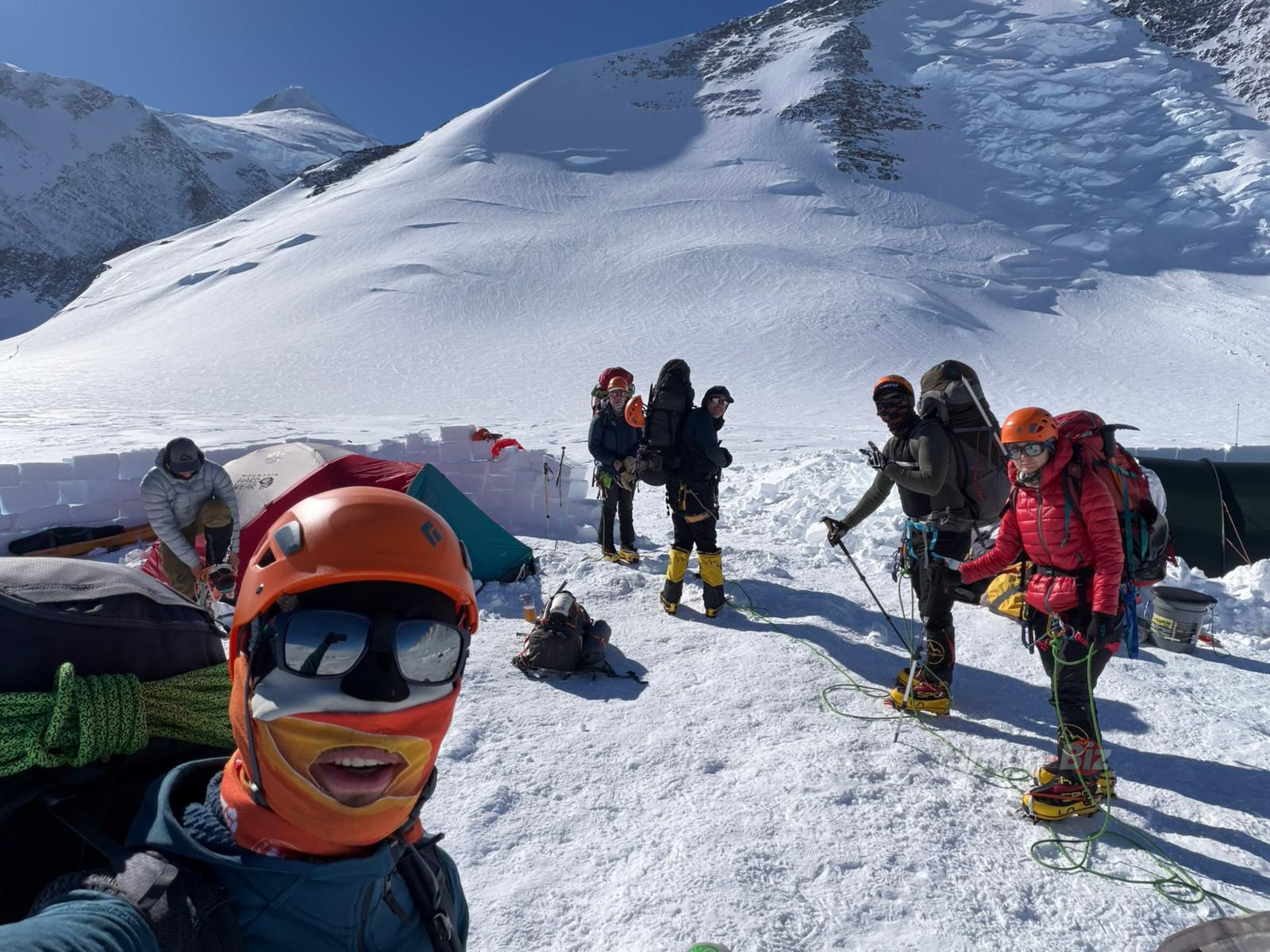
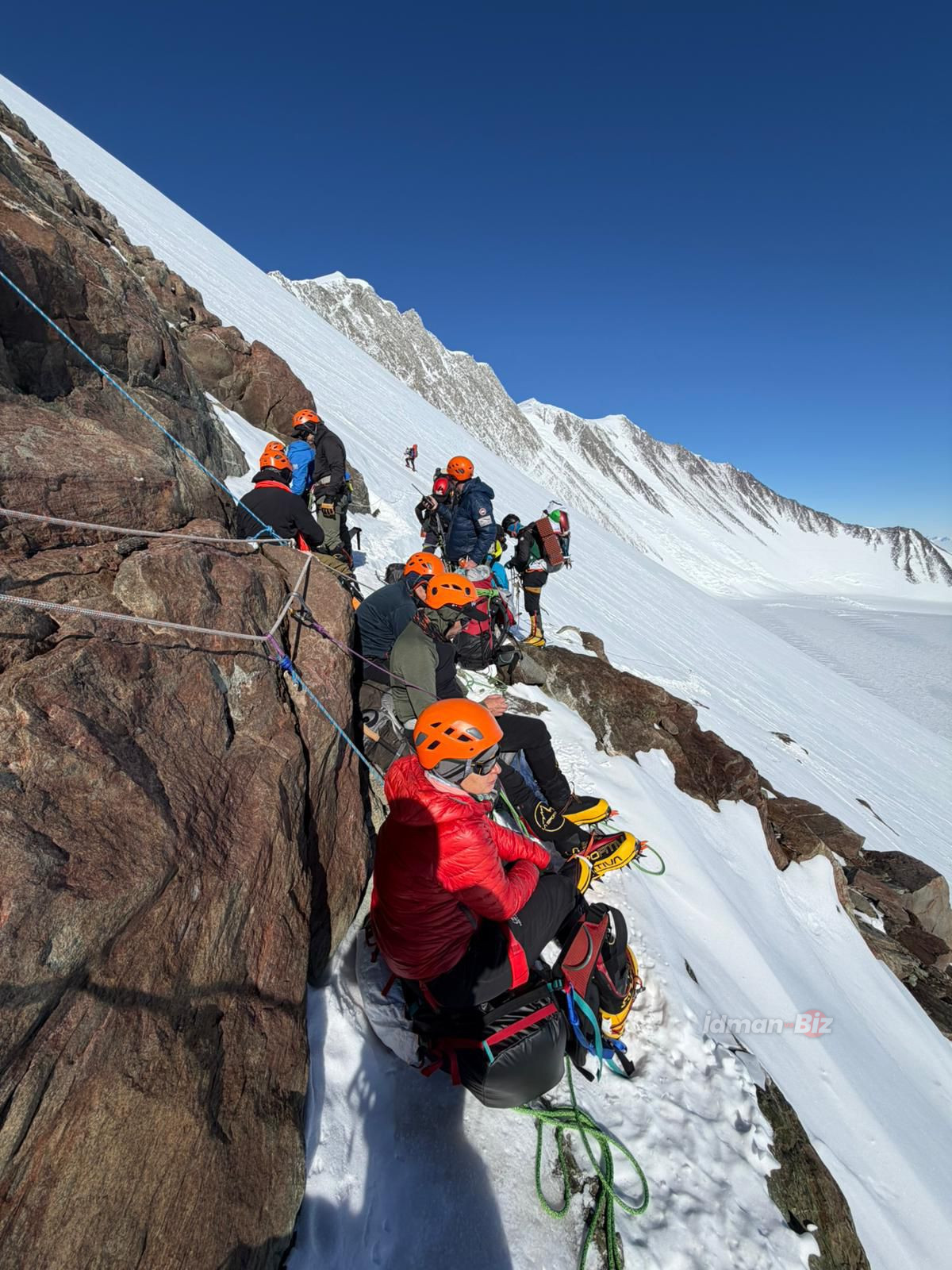
Another unique aspect of Vinson compared to the mountains I’ve climbed before is that we carry all our gear and supplies ourselves – on sleds and in backpacks. There are no assistants. From the second camp, Low Camp, to High Camp, we climbed steep slopes using ascenders with heavy backpacks. This adds extra difficulty, especially for me, as I had not trained for nearly three months due to health issues.
– How did you get to the continent?
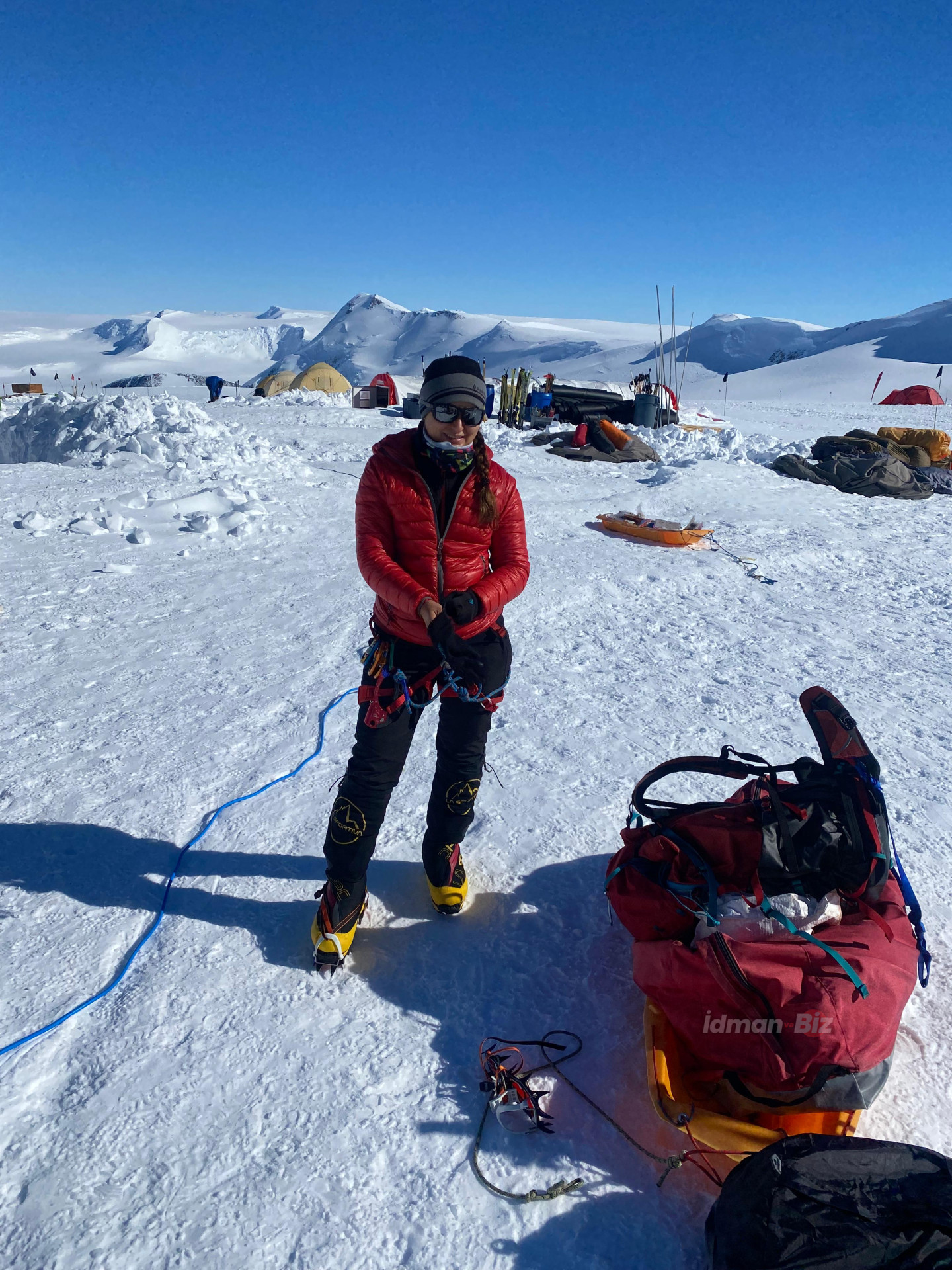
– We flew to Punta Arenas, Chile, and from there took a four-hour flight to Antarctica. We landed at Union Glacier, a small settlement for tourists, scientists, and researchers. Despite the harsh environment, it is surprisingly cozy: comfortable tents, buffet meals, separate tents for lectures and films, even showers. There are also various sports and activities.
From Union Glacier, we flew on a small plane to the base camp, where our trek to the summit began.
– What are your impressions of Antarctica?
– I am absolutely amazed. If it weren’t for Mount Vinson and the "Seven Summits" project, I probably would never have come here. But the energy, power, and purity of this continent are incredible – beyond words. I had no idea Antarctica was so vast and diverse. You might think it’s just ice and snow and wonder where the beauty lies, but it is stunning. There are no scents, yet sometimes there is a particular aroma of freshness, unlike anything else.
ALE, like all visitors to Antarctica, is required to take back everything it brings. The continent is treated with great care and respect. Antarctica is a land of peace and science, and I believe that this care and reverence amplify its unique energy.
– Which part of the climb was the most difficult for you?
– The biggest challenge came where I least expected it. The climb usually takes around seven hours, and about an hour and a half from the summit, an unexpected situation occurred. A side piece flew off my goggles, and I took off a very warm mitten to fix it. Underneath were thin fleece gloves, and while I was trying to sort it out, my hands started freezing instantly.
When the guide noticed, he sharply told me to put my mittens back on immediately and warned that if my fingers started freezing, he would send me down. I couldn’t believe it. But when I had to remove the mitten again to clear the frozen goggles, he called the rangers over the radio to escort me down.
I was in shock – an hour and a half from the summit! No matter how much I tried to convince him, he kept saying: "Elmira, the summit is not the main thing. I cannot risk your fingers." I said I would go down only if I got another chance tomorrow. He just said, "We’ll see." So, I went down with the ranger. I walked, unable to believe I had gone the whole way but didn’t reach the summit.
Back at camp, I immediately said I wanted to try again. The rangers said it was impossible – it was their first time facing such a situation. After all, I wouldn’t have the strength to climb a second day in a row. But I kept asking and persuading. In the end, they promised to discuss it with the leadership and give me an answer in the morning. I barely slept that night, knowing I needed rest but unable to stop thinking that I might not get a second chance.
In the morning, I was told I could go with guide Tom and a ranger, who were heading up to the summit anyway, to replace route markers. I was overjoyed. Tom said from the start: "I am sure you’ll make it." And indeed, I reached the summit, even faster than our group the day before.
– What did this journey to Antarctica give you?
– For me, mountains are first and foremost a spiritual journey and a process of self-discovery. During a climb, I realize a lot, so I never bring books. I am simply open to the world, observing and accepting. This time, I was reminded again: if it’s your path, everything will fall into place as it should. What seems like a "failure" or a "setback" in the moment can be part of something bigger and more important – we just cannot see the full picture, only a small segment of it.
– Which peak of the "Seven Summits" will you tackle next?
– The next summit is Denali in Alaska. It’s a very challenging mountain, primarily because of the weather conditions. Vinson is often called a "mini-Denali": conditions are similar, but Denali is harder and longer. I know mountaineers who have completed all "Seven Summits," and many consider Denali even more difficult than Everest. So I will prepare for it very seriously.
– You’ve conquered Everest and reached Antarctica. Does motivation ever wane once such peaks are behind you?
– Absolutely not. I love mountains, the climbing process, and everything connected with it. After all, the summit is just a small part of the journey. There’s preparation, a new country, incredible people, self-discovery, and personal challenges. I already have experience, but each climb brings a new story, state of mind, and feeling. Motivation doesn’t fade – it only grows.
– I understand these expeditions are very expensive…
– Yes, they are indeed very costly. I participate thanks to an Azerbaijani sponsor company, which once told me, "Elmira, you are our pride, and we want to support you." I am endlessly grateful to my sponsor for their trust and support.
– Finally, do you only enjoy extreme experiences related to mountaineering, or in life in general?
– Before mountains entered my life, I rode horses and occasionally fell, getting injured. I could safely go rollerblading or ice skating. But after mountaineering became something bigger for me, I became much more cautious with any risky activity, especially before an expedition. One wrong injury could sideline me for a long time, and mountains are now my absolute priority.
Leyla Eminova